Re-skimming a Victorian terrace in Ipswich: what to expect
Planning to re-skim your Victorian terrace in Ipswich or Suffolk? We explain the process, what affects the work and how to get a free quote.

Why Victorian terraces in Ipswich often need re-skimming
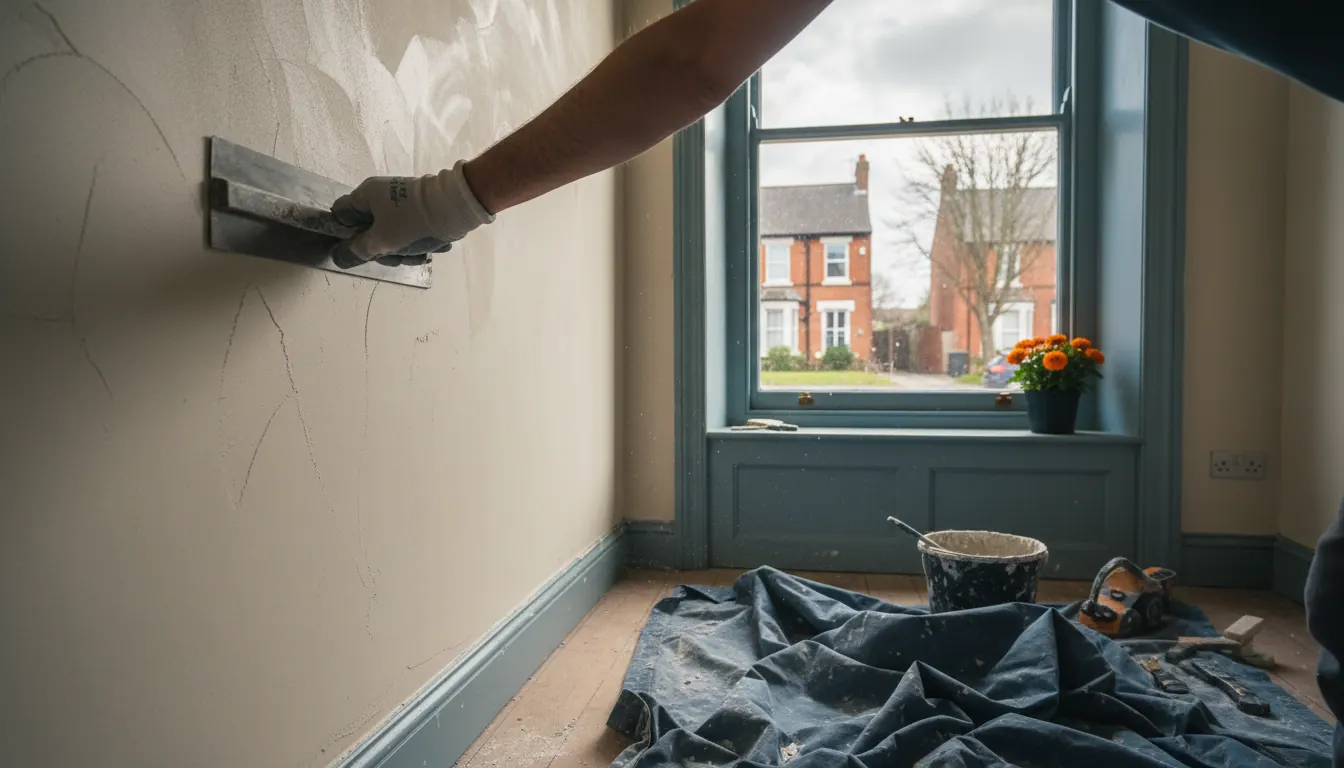
Ipswich has a generous stock of Victorian terraces. These houses are typically well over a hundred years old, and the walls and ceilings inside them tell that story: original lime-based plaster, layers of old wallpaper, patches from previous repairs, blown sections where moisture has got behind the surface, and hairline cracks running along ceiling roses and picture rails.
Modern gypsum plaster behaves quite differently from the lime plaster these houses were built with. If you are planning to re-skim a Victorian terrace in Ipswich, understanding what is actually on your walls before anyone picks up a trowel is genuinely important. It affects the preparation, the materials and the result. You can read about our re-skimming service too.
What re-skimming actually means
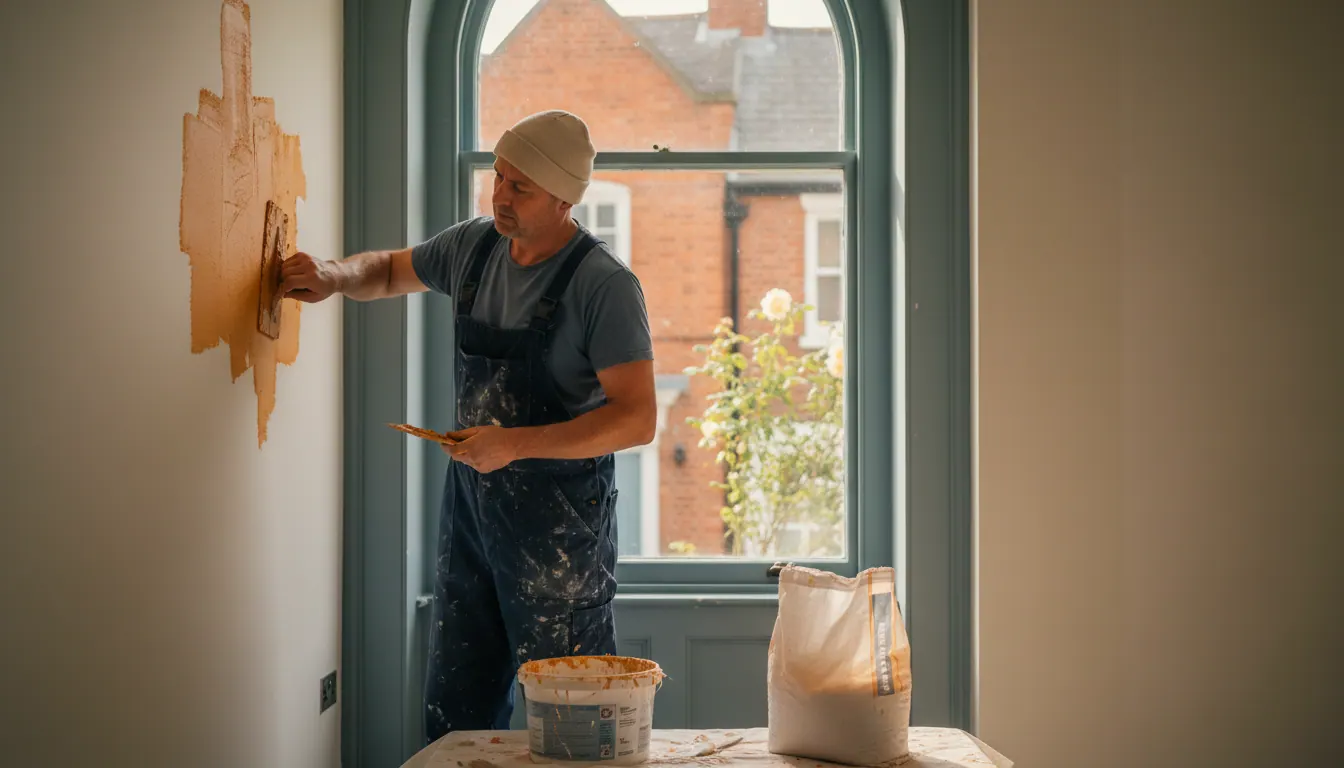
Re-skimming is the process of applying a thin, smooth coat of finishing plaster over an existing surface. It is not the same as a full re-plaster, where old material is stripped back to the brick or block and built up again from scratch.
Where the underlying plaster is still sound, re-skimming can be appropriate: the old surface is prepared, any loose or blown sections are dealt with, and a fresh skim coat is applied to give a flat, smooth finish ready for decorating.
Where the original plaster is badly damaged, heavily patched, or has large areas that have come away from the wall, a full strip and re-plaster may be the more practical route. Each wall and ceiling needs assessing individually.
The challenge of lime plaster in older properties
Victorian terraces were built using lime-based plaster on timber laths. This system is flexible and breathable, and in a well-maintained house it can last well over a century. The problem comes when modern materials are layered on top without understanding how the original wall works.
Lime plaster is softer and more flexible than modern gypsum. It expands and contracts with changes in temperature and humidity, which matters in a Suffolk climate where winters are damp and walls in older terraces can hold moisture. Applying a hard skim coat directly over failing lime plaster without proper preparation can lead to cracking or delamination.
That does not mean re-skimming a Victorian terrace is impossible. It means preparation matters: blown sections need to be cut out and repaired, and the surface needs to be stabilised before a new skim coat goes on.
For listed buildings or properties in one of Ipswich's conservation areas, there are additional considerations. Original lime plaster should be assessed carefully before any replastering work. Listed building consent or conservation area rules may apply, so check with your local council before starting. Heritage plaster restoration is specialist work, so it is worth asking any plasterer exactly what they cover.
What to look out for before the plasterer arrives
A good plasterer will assess the walls and ceilings before quoting. Here is what typically needs attention in a Victorian terrace:
- Blown plaster. Tap the wall with your knuckle. A hollow sound means the plaster has separated from the surface behind it. These sections cannot simply be skimmed over; they need to come off and be made good first.
- Damp. If there are damp patches, staining or a musty smell, the source needs to be identified and resolved before plastering. Skimming over active damp is a short-term fix that will fail, and a damp specialist should be consulted if there is any doubt about the cause.
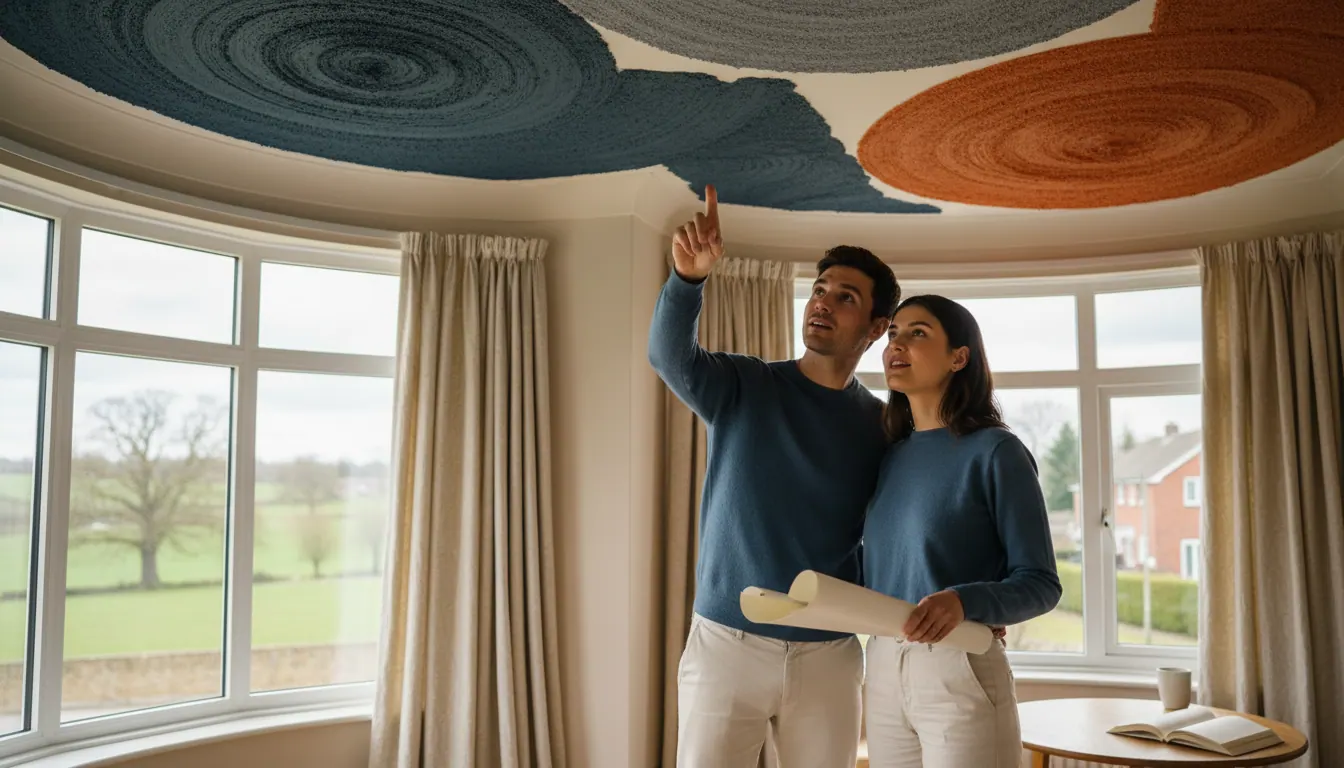
- Artex or textured ceilings. Many Victorian and Edwardian terraces have had textured coatings applied at some point. If the coating was applied before the year 2000, it may contain asbestos. It should never be sanded, scraped or disturbed without first identifying what it is, so get advice from a qualified asbestos professional if you are unsure. See our artex covering page.
- Previous repairs. Older terraces often have a patchwork of different materials on the same wall, and these need careful preparation so the new skim coat bonds evenly.
- Wiring and pipework. If the property has recently had a rewire or new plumbing, there will be chases cut into the walls that need filling and making good before skimming. It is worth finishing the trades' work before the plasterer starts.
How the re-skimming process generally works
Once the walls and ceilings have been assessed and any preparatory work is done, the process is straightforward.
The room is cleared as much as possible and floors and furniture are protected. The existing surface is prepared: loose material removed, blown sections cut out and repaired, and the surface treated with a bonding agent to control suction and help the skim coat key properly. Getting this step right is what separates a long-lasting result from one that cracks or peels.
The skim coat is then applied, usually in two passes, and trowelled to a smooth, flat finish. How many rooms can be done in a day depends on their size and condition.
Drying time and decorating after re-skimming
New plaster needs time to dry properly before it can be painted. Drying times vary depending on the thickness of the plaster, the product used, the temperature and the ventilation in the room, so follow the manufacturer's guidance and do not rush this stage.
Fresh plaster is porous. It should not be painted with standard emulsion straight away. A mist coat (a diluted emulsion) should go on first to seal the surface. Skipping the mist coat is one of the most common reasons decorating jobs look patchy or start to peel.
Good ventilation helps the drying process. In a Victorian terrace in Suffolk during autumn or winter, drying takes longer than in summer, so be patient.
Choosing a plasterer for an older Ipswich property
Victorian terraces in Ipswich vary enormously in condition. The preparation on a well-maintained house is a very different proposition from one that has had decades of DIY repairs and damp problems.
When you are looking for a plasterer, it is reasonable to ask how they approach blown or failing plaster, and whether they will flag anything that needs sorting before they start. A good plasterer will tell you if the walls need more preparation than a straightforward skim.
We provide free quotations for projects of all sizes, from a single room to a full house. Read more about us. You can also see our wall and ceiling plastering service.
Frequently asked questions
Can you skim over old lime plaster in a Victorian terrace? In many cases, yes, but the condition of the existing plaster matters. If the lime plaster is still sound and well-bonded, it can be a suitable base for re-skimming with the right preparation. If it is blown, crumbling or heavily patched, the failing sections need to come off first.
What should I do about a textured (artex) ceiling before re-skimming? If the textured coating was applied before 2000, it may contain asbestos. It should not be sanded, scraped or disturbed until you know what it is. Get advice from a qualified asbestos professional if you are unsure. Once the safety question is resolved, a textured ceiling can be skimmed over or overboarded to give a smooth finish.
Does damp need to be sorted before plastering? Yes. Plastering over active damp will not fix the problem and the new plaster will fail. If you have damp patches, staining or a musty smell, have the source identified and treated by a damp specialist before any plastering takes place.
Do I need permission to re-skim a Victorian terrace in a conservation area? Re-skimming internal walls and ceilings does not usually require planning permission. However, if your property is listed, listed building consent and conservation area rules may apply. Check with your local council (Ipswich Borough Council, East Suffolk Council, or Babergh and Mid Suffolk, depending on your location) before starting work.
Ready to get your Victorian terrace looking its best in Ipswich? Get in touch with us for a free quotation, or call 07944 437513. We are available Monday to Friday 7.30am to 5pm and Saturday and Sunday 9am to 5pm.