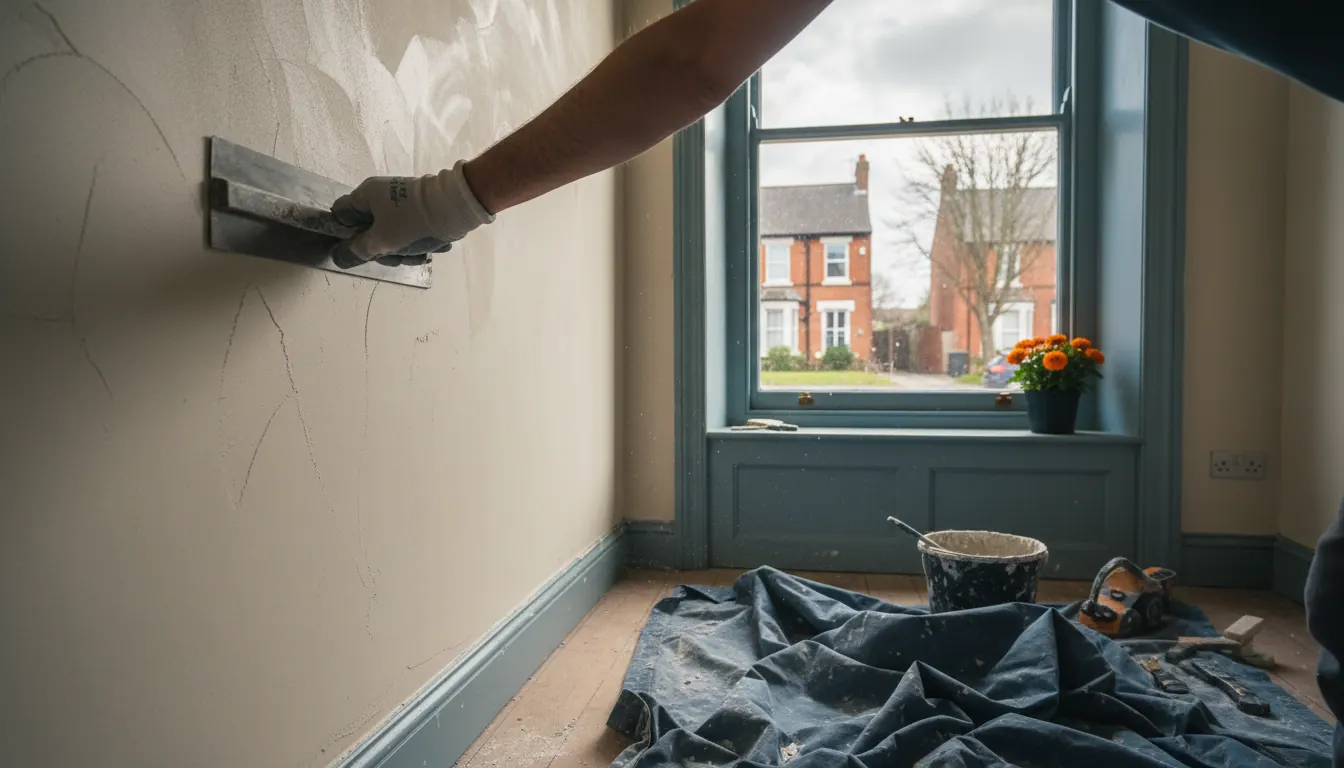
Plaster repairs after building work: what plasterers need to do
Building work left your walls and ceilings damaged? We explain what to expect from plaster repairs after building work in Ipswich and Suffolk.

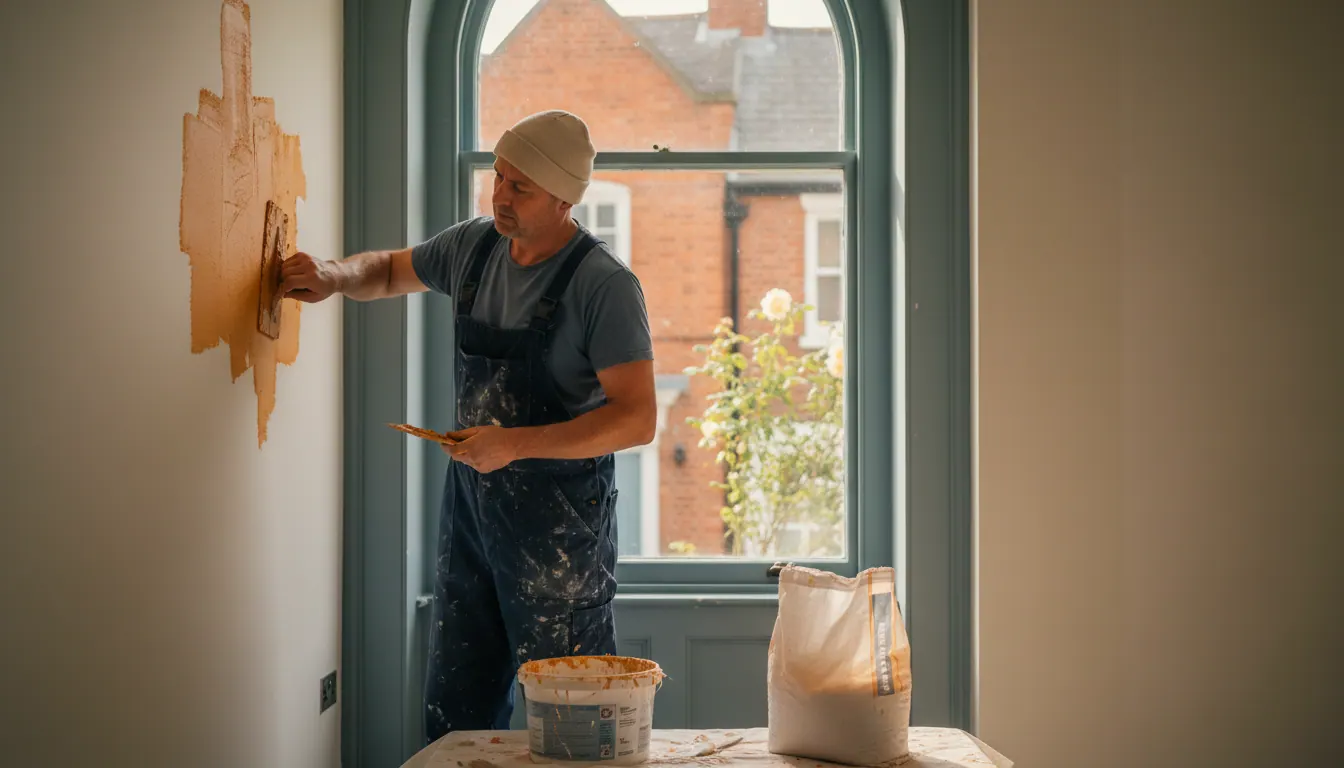
Why building work always leaves plastering to sort out
Building work rarely finishes cleanly. Whether you have had an extension added, a loft converted, a rewire carried out or a bathroom refitted, the walls and ceilings almost always need attention once the builders have gone. Cables get chased in, pipes get boxed out, doorways get widened, and every one of those jobs can leave bare patches, cracked surfaces or sections of old plaster that do not match the rest of the room.
This is completely normal. Plaster repairs after building work are a common need across Ipswich and the surrounding areas of Suffolk, and getting them right takes a bit more thought than a straightforward re-skim. You can read about our plaster repairs service.
The most common damage building work leaves behind
Different trades leave different kinds of mess. Understanding what you are dealing with helps you have a sensible conversation with your plasterer.
After a rewire or first-fix electrics:
- Chased channels cut into walls for cables, then filled roughly
- Holes around new sockets, switches and consumer units
- Sections of plasterboard cut back to reach joist voids or ceiling spaces
After structural work or an extension:
- New blockwork or plasterboard walls that need a full skim
- Joints between old and new plaster that are prone to cracking
- Ragged edges around new openings and lintels
- A visible line where old wall meets new
After a bathroom or kitchen refit:
- Tiles removed, taking the plaster face with them in places
- Pipe runs chased in and roughly made good
- Patches where old units were fixed into the wall
In older Ipswich properties, Victorian terraces in particular, the original plaster is often lime-based and quite thick. Modern gypsum plaster behaves differently, so matching repairs into original walls needs careful assessment. Listed buildings and properties in conservation areas may also have specific requirements, so check with your local council before any significant replastering work begins.
Patch repair, re-skim or full replaster: which do you need?
The honest answer depends on the extent of the damage and the condition of the surrounding plaster.
Patch repairs work well when the damage is isolated and the existing plaster around it is sound and well-bonded. The old plaster is cut back to a clean edge, the right background coat is applied, and the patch is skimmed to match the surrounding surface. On older walls there may be a slight variation in texture or level that only shows under raking light.
Re-skimming a whole wall or ceiling makes sense when there are multiple patches close together, when the existing skim coat is tired, or when you want a consistent finish across the whole surface. After a rewire there are often so many small repairs scattered across a room that re-skimming the whole thing is the neater solution. See our re-skimming page.
Full replastering is needed when the background plaster has failed, when large sections have blown (lost their bond to the wall), or when new blockwork or plasterboard needs plastering from scratch. This is common in extension work, loft conversions and significant renovations. See our page on plastering for extensions and renovations.
If a patch repair will do the job properly, that is what is worth choosing rather than more work than the job needs.
What happens at the join between old and new plaster?
This is one of the trickier parts of post-building-work repairs. Where new plaster meets old, there is always a risk of cracking along the joint as the two materials move slightly differently over time.
Good practice includes:
- Cutting back the old plaster to a clean, straight edge rather than feathering into a ragged break
- Using the right bonding agent on the background so the new plaster keys properly
- Taping and filling joints between plasterboard sheets before skimming, to reduce the risk of cracking through the finish coat
- Applying plaster in suitable conditions, not in freezing cold or strong direct heat, both of which affect how it cures
Suffolk's damp, changeable weather means walls can hold moisture, especially in older properties. Plaster applied over a damp background will not bond or dry correctly, so if there is any sign of moisture in the wall, the source needs to be identified and addressed before plastering begins.
Plastering after a rewire: a common scenario in Ipswich homes
A full rewire is one of the most disruptive things you can do to a house, and it is a common job in older homes, including many Victorian and Edwardian terraces. Once the electricians have finished, the house can look worse than before: chased lines across walls and ceilings, rough fills, exposed backgrounds and cracked plaster wherever cables have been pulled through.
The usual sequence is:
- Let the electricians fully finish and sign off their work before plastering starts
- Check that all chases are properly filled with a suitable material and have dried out
- Decide whether individual patch repairs or a full room re-skim is the better approach
- Treat any bare or porous backgrounds with the appropriate primer or bonding agent
- Skim to a smooth, even finish ready for decoration
After the plaster has dried, new plaster needs a mist coat before any standard emulsion. Drying times vary depending on thickness, the product used, temperature and ventilation, so follow the manufacturer's guidance and do not rush it. Painting over plaster that has not fully dried is one of the most common mistakes after building work.
For more on what the replastering stage involves in an older property, see re-skimming a Victorian terrace in Ipswich: what to expect.
Preparing your home for plaster repairs after building work
A bit of preparation makes the job go more smoothly and protects your belongings.
- Clear the room as much as possible. Plaster dust travels further than you expect.
- Remove pictures, curtains and anything fixed to the walls being worked on.
- Cover floors with dust sheets, especially carpets.
- Make sure the area is accessible, so work can happen without climbing over furniture.
- Keep the room at a reasonable temperature, because plaster should not be applied in freezing conditions.
- If the building work has only just finished, allow any fresh concrete, screed or new blockwork to dry out before plastering begins.
Frequently asked questions
How soon after building work can plastering start? It depends on what has been done. New blockwork, screeds and concrete need time to dry out before plaster is applied, as trapped moisture causes problems later. Allow new masonry to dry for as long as is practical, and let fresh filler in chases cure fully before skimming over it.
Will the repairs be visible once the walls are painted? A well-executed patch repair should be invisible once painted. On older walls with uneven original plaster, there can be a slight difference in level or texture under very raking light. Re-skimming the whole wall or ceiling gives the most consistent result and is often the better option after extensive building work.
Can plaster go over the rough fills builders leave? Sometimes, but not always. It depends on what product was used, how well it has bonded and how flat the surface is. Some fills are fine to skim over once dry; others need to be cut back and redone.
Does new plaster need special treatment before painting? Yes. New plaster is very porous and will soak up standard emulsion unevenly. It needs a mist coat first, which is a diluted emulsion applied to seal the surface. Allow the plaster to dry fully first, as drying times vary.
Get a free quotation for plaster repairs in Ipswich and Suffolk
If building work has left your walls and ceilings in need of attention, we are happy to take a look. We cover Ipswich and the surrounding areas of Suffolk and offer free quotations for projects of all sizes. Read more about us.
Call us on 07944 437513 (Monday to Friday 7.30am to 5pm, Saturday and Sunday 9am to 5pm) or use the contact form to tell us about your job.