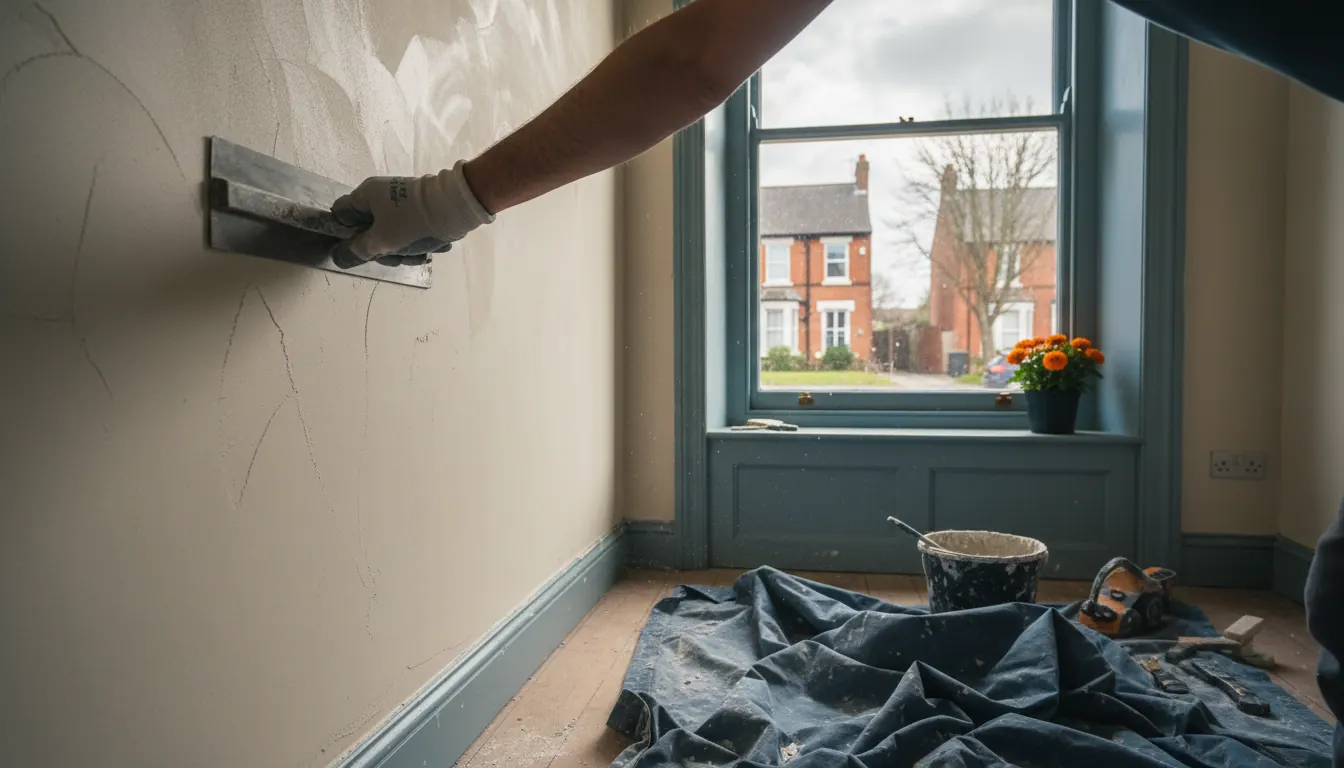
Artex ceiling options for 1930s semis in Ipswich and Suffolk
Got an artex ceiling in your 1930s Ipswich semi? We explain your options: skim over, overboard or cover, plus what to check for asbestos first.

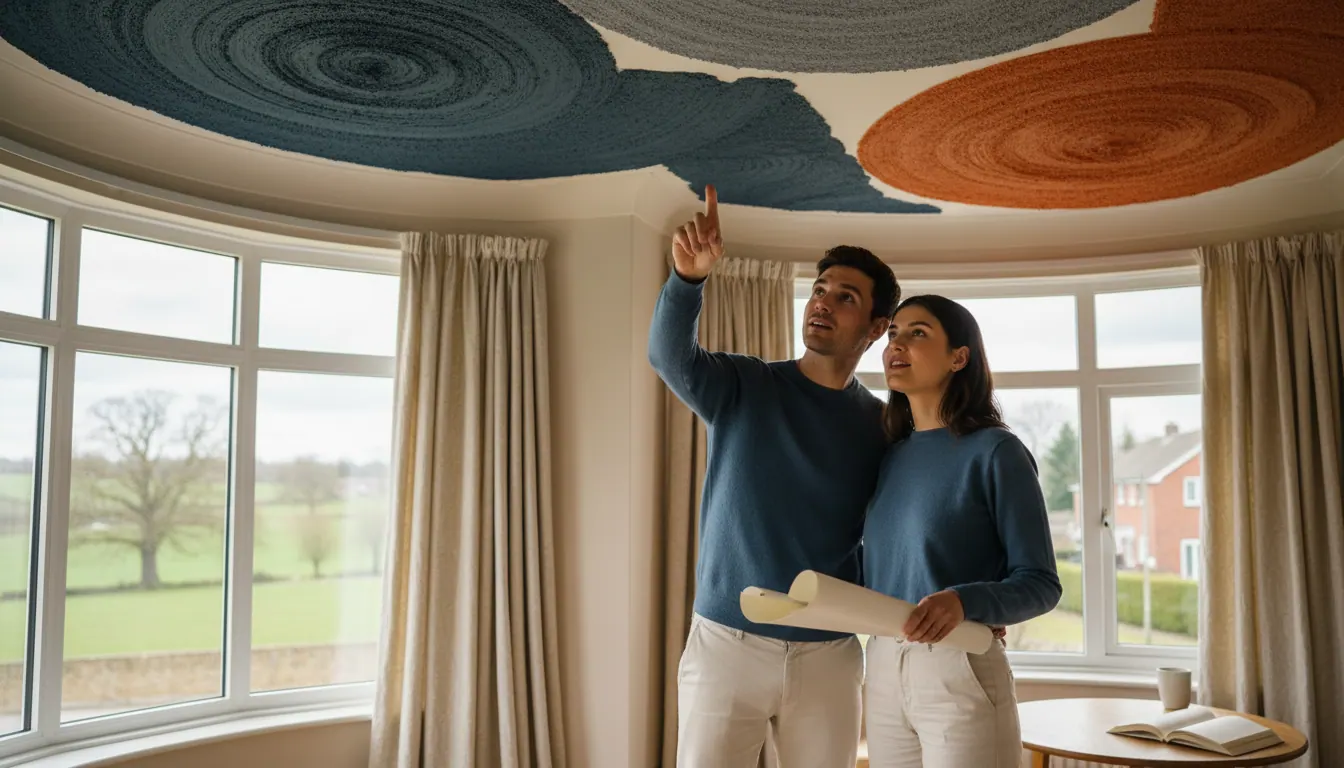
That artex ceiling in your 1930s semi: what are your options?
Textured ceilings are a common feature of 1930s semis across Ipswich and the surrounding areas of Suffolk. The pattern varies: swirls, stipples, a deep comb texture, or a heavy "popcorn" finish that seems to catch every shadow. Whatever the style, the question is always the same: what do I do with it?
You have three realistic options. You can skim plaster over the artex, you can overboard it with plasterboard, or you can use a covering system designed for textured ceilings. What suits your ceiling depends on its condition, the texture depth, and one important safety consideration that you need to deal with first. You can read about our artex covering service.
Asbestos: the first thing to establish
Artex and similar textured coatings applied before the year 2000 may contain asbestos. This is not a scare story; it is simply a fact about materials that were widely used in domestic construction during that period. A 1930s semi in Ipswich will very likely have had its ceilings decorated or redecorated at some point between the 1950s and the 1990s, which puts any artex applied in those decades within the risk window.
When the material is left undisturbed and in good condition, it does not present an immediate hazard. The risk arises when it is sanded, scraped, drilled or otherwise disturbed, which can release fibres into the air.
What you should do before any work starts:
- Do not sand, scrape or dry-sand the ceiling yourself.
- If you are unsure when the artex was applied, treat it as potentially containing asbestos until proven otherwise.
- Arrange a sample test through a qualified asbestos professional, who can take a sample safely and have it analysed by an accredited laboratory.
- If asbestos is confirmed, follow the professional's advice on how to manage it.
Never attempt DIY removal of a textured ceiling of unknown age. Once you have a clear picture of the material, the plastering options can be talked through properly.
Option one: skimming over artex
Skimming over artex is possible, but it depends heavily on the depth and profile of the texture. A light stipple or a shallow swirl can sometimes be skimmed over with finishing plaster, producing a smooth, flat ceiling ready for decoration. A deep comb pattern or heavy popcorn texture is a different matter: the profile can be too pronounced for skim plaster alone to bridge cleanly, and the result can show the texture underneath.
There is also an adhesion consideration. Artex is a dense, low-suction surface, so it generally needs treating with a bonding agent to give the finishing plaster something to grip. Each ceiling needs assessing before this route is chosen, because a skim that fails to bond properly, or that mirrors the texture underneath, is not a good result for anyone.
This option can suit ceilings where the artex is relatively fine, the surface is sound, and there is no sign of movement or cracking in the ceiling beneath. For more on what a re-skim involves in an older property, see re-skimming a Victorian terrace in Ipswich: what to expect, much of which applies equally to 1930s semis. You can also read about our re-skimming service.
Option two: overboarding the ceiling
Overboarding means fixing a layer of plasterboard directly over the existing ceiling, then skimming the new board to a smooth finish. It is a popular choice where the artex texture is too deep to skim over, or where the original ceiling plaster beneath has seen better days.
The advantages are real:
- You get a completely fresh, flat surface to work with.
- The artex is enclosed rather than disturbed, which is relevant where asbestos has been confirmed and the professional's advice is to leave it in place.
- The finished result is a smooth, plastered ceiling.
There are practical considerations too. Overboarding adds a little thickness to the ceiling, which matters around light fittings, ceiling roses and coving. Any change in level will affect existing coving, and light fittings will need adjusting by a qualified electrician. The boards also need to be fixed properly into the joists above, using the correct fixings.
See our plasterboarding and overboarding page.
Option three: ceiling covering systems
There are proprietary coating systems designed to cover textured ceilings. These are applied as a thick compound that fills and bridges the texture, then sands back to a smooth surface ready for decoration. They sit somewhere between a standard skim and a full overboard in terms of disruption and finish.
These systems can work on lighter textures, and they are sometimes considered where overboarding is not practical, for example where ceiling height is very restricted. As with skimming, the finish depends on the texture depth and the condition of the existing surface.
Each ceiling is different, even within the same street, so the right approach depends on the ceiling in front of you.
What about the rest of the room?
Many homeowners tackling an artex ceiling in a 1930s semi also want to address the walls at the same time. It makes sense to combine the work where possible: the room is already cleared, the dust and disruption happen once rather than twice, and the finished result is consistent throughout.
If your walls have hairline cracks, patches of blown plaster, or a tired surface that has been painted over many times, a full re-skim or targeted repairs may be the right approach. Suffolk's damp, changeable climate does not help older plasterwork, and moisture movement can show up as cracking or hollowing over time. See our plaster repairs page.
Frequently asked questions
Can I just paint over artex to hide the texture? Paint will not flatten a textured ceiling; it follows the surface rather than filling it. If you want a smooth result, you need a plastering solution: skim, overboard or a covering system.
Does artex always contain asbestos? No. Artex and similar textured coatings applied after the year 2000 are not expected to contain asbestos. The risk applies to coatings applied before 2000. If you do not know when your ceiling was treated, the safe approach is to have it tested by a qualified asbestos professional before any work is carried out.
Is overboarding better than skimming over artex? It depends on the ceiling. Overboarding gives you a completely fresh surface and is often the better option where the texture is deep or the existing plaster is in poor condition. Skimming can work on lighter textures where the surface is sound.
Do I need to do anything special in a conservation area or with a listed building? If your property is listed or sits within a conservation area, check with your local council before carrying out any significant internal work, as listed building consent rules vary.
Ready to sort that ceiling in Ipswich?
If you have an artex ceiling in a 1930s semi in Ipswich or the surrounding areas of Suffolk and you want a straight answer on the best approach, we are happy to take a look. We offer free quotations for projects of all sizes. Read more about us.
Call us on 07944 437513 (Monday to Friday 7.30am to 5pm, Saturday and Sunday 9am to 5pm) or get in touch using our contact form.